
Why us
Why Tyne and Wear homeowners choose our brickwork
It is the founding trade here
John has laid brick since 1986. Masonry is not subbed out to whoever is available.
Lime used where lime belongs
On solid stone and soft brick. Getting this wrong causes damage that takes years to show and thousands to undo.
Mortar matched, not guessed
The joint is most of what your eye reads. We match colour and profile before we start, not after.
What it is
Bricklaying and Masonry, built to last
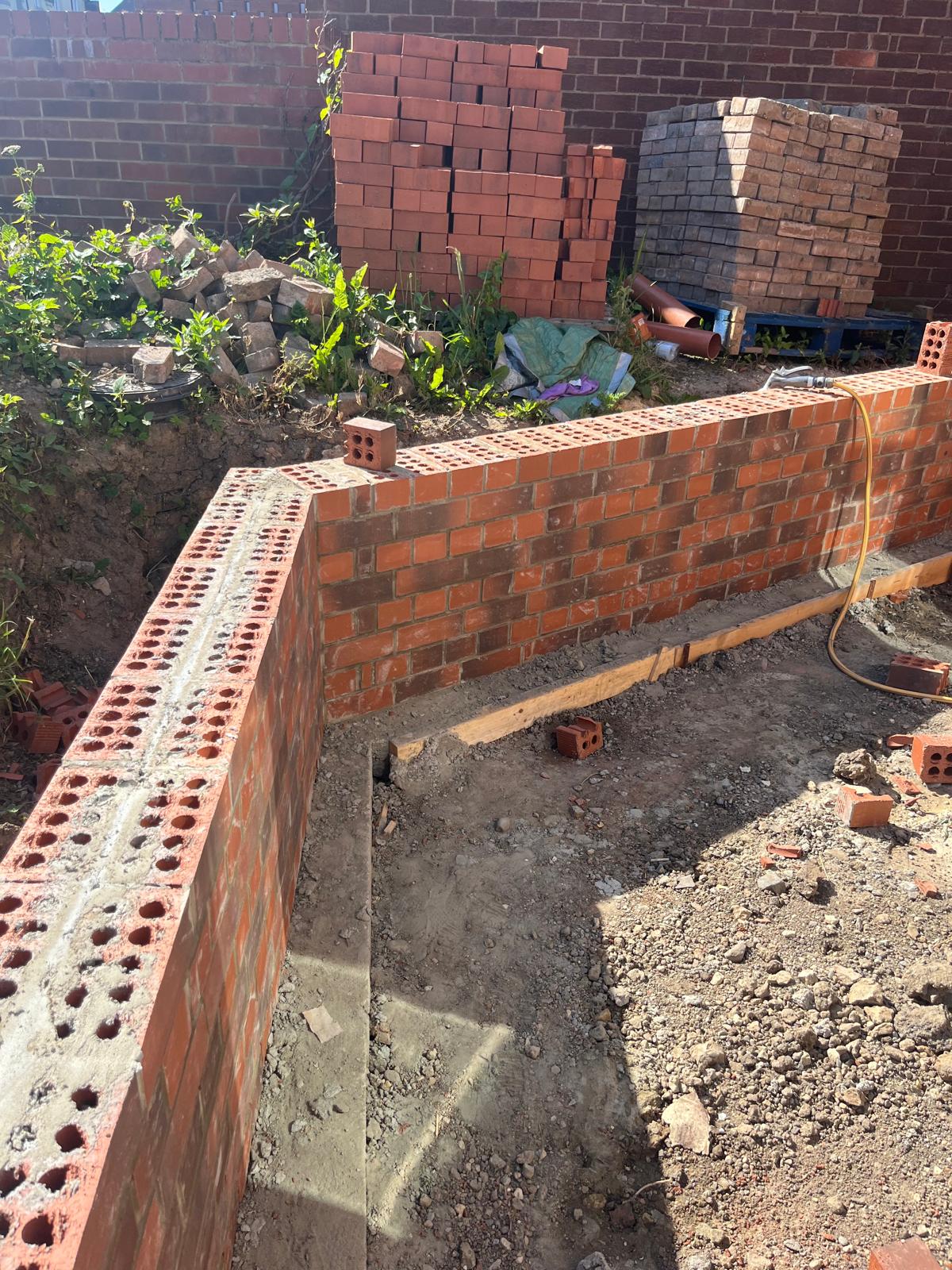
New brickwork, stone repair, repointing, garden and retaining walls, and matching work on older property. This is the trade John came into in 1986, and it is still the part of the business the rest is built on. Most of what we get called out to fix is pointing — usually cement, usually on a building that needed lime.
- New brick and blockwork
- Stone repair and matching
- Repointing in lime or cement as appropriate
- Garden, boundary and retaining walls
- Piers, arches and feature brickwork
- Structural openings and lintel replacement
40 years in the trade. Domestic and commercial, across the North East.
Choices
The brickwork options we offer
Repointing and stone repair
Raking out failed joints and repointing in the right mortar, plus cutting out and replacing damaged stone or brick.
Garden and retaining walls
Founded, drained and built to last, in brick, block or stone.
New and matched brickwork
Extensions, openings, piers and feature work matched into existing masonry.
Ready for your free brickwork quote?
A free site visit and a written quote, with no obligation and no chasing afterwards.
Lime or cement?
A solid wall built before roughly 1919 has no cavity and no damp proof course. It is designed to absorb moisture and let it evaporate back out, largely through the mortar joints, which are deliberately softer than the masonry around them.
Cement pointing blocks that route. The moisture still gets in, but now it leaves through the face of the brick or stone, and takes the surface with it as it goes. On any solid-walled building, lime is not a preference — it is the repair.
North East masonry
The region is unusually rich in solid sandstone building — terraces, farm buildings and whole conservation-area streets in places like Alnwick, Hexham and Durham. Sandstone is soft and vulnerable to the wrong mortar, and the damage from cement pointing is visible on streets right across the North East. It is the single most common avoidable problem we are asked to put right.
Looking after your brickwork
Look at your pointing and your rainwater goods once a year, ideally after a wet autumn. A dripping gutter onto masonry does more damage over five years than a decade of ordinary weather, and it is the cheapest thing on this whole site to fix.
The GGH Build Standard
Our brickwork process at a glance
How your brickwork job actually runs, start to finish.
-
Free site visit
You show us round and tell us what you want. We measure up and talk through what it involves.
-
Written quote
An estimated cost with the scope in plain English. Groundwork the job needs is priced in here, not later.
-
The work
New work laid or joints raked out and repointed, in a mortar matched to the wall rather than to a bag.
-
Handover
We walk it with you and write the snagging list together. Not signed off until that list is empty.
In their own words
Trusted by homeowners across the North East
Real customers, real names, real jobs. Rated 5.0 from 4 reviews.
Bricklaying and Masonry
Common brickwork questions
Nine times out of ten because it is cement on a building that was built with lime. Cement is harder than the stone or the soft brick around it, so moisture cannot escape through the joint and comes out through the face of the masonry instead, taking the surface with it. The fix is to rake it out and repoint in lime.
Usually, and it depends as much on the mortar as the brick. Colour, joint profile and the width of the joint do more to hide a join than the brick itself. On older stock we will often use reclaimed brick and mix the mortar to match the weathered colour rather than the original.
Yes, and how much depends on height and whether it is retaining. A free-standing garden wall needs a modest strip footing; anything holding back ground needs a designed foundation and drainage behind it. Walls built straight off the soil are the ones that lean.
Where we work
Areas we cover
Across Tyne and Wear, Northumberland and Teesside. Find your town below — no call-out charge anywhere we go.
Get a Free Quote
Free, no-obligation quote. No pressure, no chasing. We respond during working hours, Monday to Saturday.
40 years in the trade. Domestic and commercial, across the North East.